
3 hr
Udawalawe National Park Elephant Safari with Expert Guide
Explore Sri Lanka's premier elephant reserve on a private 4x4 safari through diverse habitats
Reserve
Hand-picked by our editors — only the best 5 safari experiences from 12 reviewed.
Verified partners for every tour, free cancellation where available, and instant confirmation on every booking.
3 hr
Explore Sri Lanka's premier elephant reserve on a private 4x4 safari through diverse habitats
Reserve
4 hr
4x4 wildlife adventure through one of Sri Lanka's premier reserves with baby elephant encounter
Reserve
3 hr
Three-hour wildlife adventure spotting hundreds of elephants and diverse fauna across Sri Lanka's premier safari destination
ReservePrices from verified partners. Availability updates in real time at checkout. Free cancellation policies apply where shown.
The landmarks, rooms, and views travelers on this tour remember — all visible on a single visit.
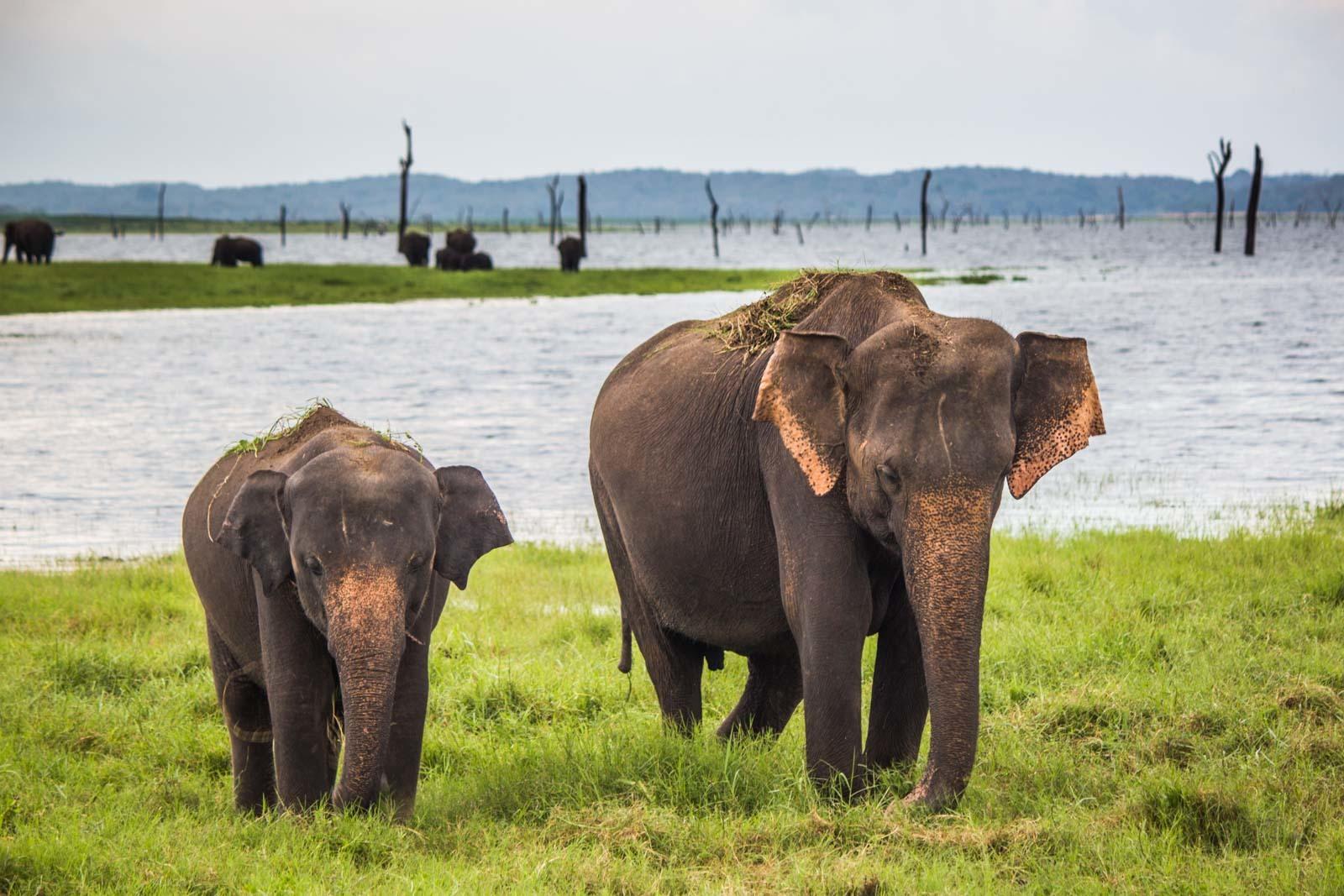
This central water source is where elephant herds frequently gather to bathe, making it a focal point for any udawalawe safari tour.
They complement each other; visitors seeking frequent elephant sightings prefer the udawalawe safari tour, while those prioritizing leopard encounters find Yala to be the more thrilling choice.
| Feature | Top pick Udawalawe | Yala |
|---|---|---|
Primary wildlife |
Wild elephants | Leopards |
Leopard probability |
Negligible | High |
Park size |
30,821 hectares | 97,881 hectares |
Crowd density |
Moderate | High |
Landscape type |
Grassland and reservoir | Dry monsoon forest |
Udawalawe safari tour tours |
Available | N/A |
Udawalawe safari tour tour |
Available | N/A |
Udawalawe safari tour tickets |
Available | N/A |
| See tickets → |
Verdict: Choose the Udawalawe safari tour for consistent elephant photography in a serene setting, or select Yala if witnessing apex predators in their natural habitat is your primary goal for these udawalawe safari tour tickets.
Choose your ticket, select your date, and reserve in under two minutes. Secure checkout handled by our verified partner.
Instant confirmation by email, with a mobile voucher you can save offline. No printing, no queuing at a collection desk.
Arrive at the entrance, show your voucher on your phone, and walk in. Most tickets include priority or skip-the-line access.
Practical details for your visit straight from our verified partners — hours, access, rules, and how to get there.
Udawalawe, Sri Lanka
Primary meeting point for all booked safari jeeps
Private hire is the most flexible way to reach the entrance gate for your udawalawe safari tour.
Take a bus to Embilipitiya then a local taxi or bus to the park entrance.
Lightweight, breathable clothing is recommended for the tropical climate. Neutral earth tones help you blend into the surroundings and avoid startling wildlife during your udawalawe safari tour.
Small daypacks are permitted, but keep valuables secure within your safari vehicle. Large luggage should be left at your accommodation prior to starting your udawalawe safari tour.
Use a telephoto lens to capture wildlife without disturbing natural behaviors. Ensure your camera batteries are fully charged before your udawalawe safari tour as there are no charging points inside.
The park terrain consists of bumpy, unpaved dust tracks that may be challenging for those with limited mobility. Please inform your tour operator in advance so they can provide a suitable, well-maintained jeep for your udawalawe safari tour.
The park is family-friendly, but ensure children remain seated inside the vehicle at all times. A standard udawalawe safari tour lasts several hours, so bring necessary snacks and hydration for young ones.
Carry sufficient bottled water as facilities are not available once you enter the park. Plan for a meal either before or after your udawalawe safari tour in the town of Udawalawe.
Udawalawe, Sri Lanka
Primary meeting point for all booked safari jeeps
Get directionsBest time to go, insider tips, nearby landmarks, and the cancellation fine print — flip through to skim what matters to you.
How crowds, weather, and events shift across the year.
Dry, clear mornings provide excellent visibility and comfortable temperatures for all-day viewing.
Soft light and fresh green landscapes follow short rains, creating ideal conditions for patient photography.
Classic dry season weather concentrates herds near the waterholes, increasing sightings during your udawalawe safari tour.
Passing showers revitalize the vegetation, attracting migratory birds and offering a vibrant, colorful backdrop.
Small details that turn a good visit into a great one.
Arrive at 06:00 to maximize animal sightings before the midday heat during your udawalawe safari tour.
If booking a jeep locally, clarify all inclusive fees upfront for your udawalawe safari tour.
Minimize noise to ensure better interactions with wildlife, especially when observing elephant herds.
The sun is intense during midday; wear a hat and apply sunscreen before entering for your udawalawe safari tour.
Request a licensed guide to better understand the ecology of the reservoir area during your udawalawe safari tour.
Non-bookable sights within a short walk — free to visit, easy to pair.
Large water body central to the park landscape providing scenic sunset views.
Specialized facility for rehabilitating orphaned calves before they are returned to the wild.
Historic ancestral manor showcasing traditional Sri Lankan noble architecture and local history.
Flexible, no hidden fees.
Entry fees are non-refundable once purchased at the park gate. For private tours, check your operator's specific cancellation terms regarding the 25 USD conservation fee.
Hand-picked options within walking distance — pick a district for vibe, or a specific hotel for convenience.
High-end resort offering guided wildlife excursions and modern comforts.
Eco-focused lodge providing an intimate and informative connection to the local environment.
Numerous options in Udawalawe town offering authentic local hospitality and easy park access.
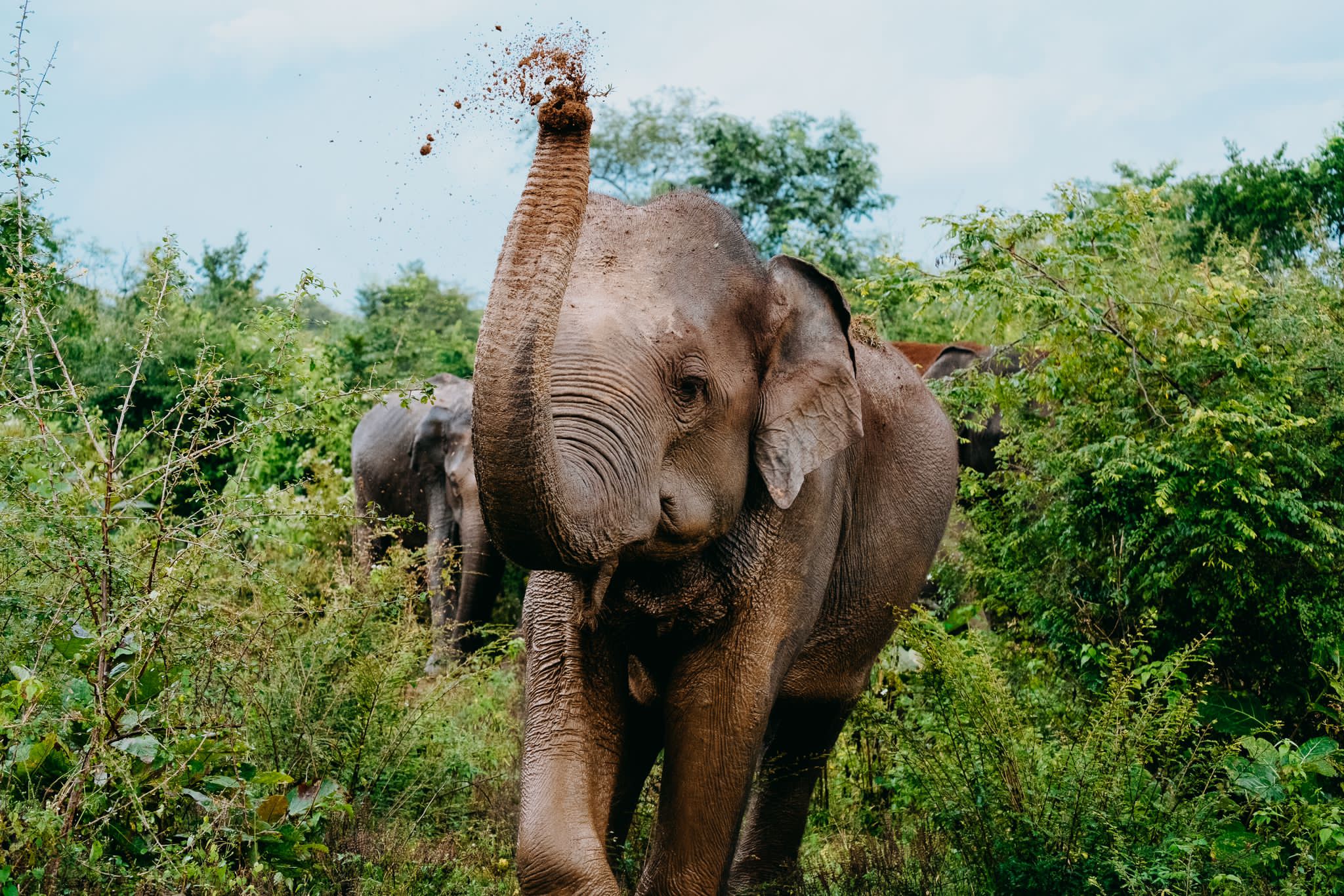
Udawalawe National Park opened in 1972 to provide sanctuary for wildlife displaced by the Udawalawe Reservoir construction, and today protects 308 square kilometers of dry-zone scrubland and open grassland in Sabaragamuwa Province. The reservoir itself anchors the northern boundary, its shoreline a magnet for herds that descend from the surrounding hills each morning. What began as a resettlement effort has become Sri Lanka's most reliable elephant viewing ground, with populations exceeding 500 individuals — one of the highest densities on the island. The park's geography favors visibility. Unlike the dense canopy forests of Yala or Wilpattu, Udawalawe's terrain is characterized by low scrub, acacia thickets, and expansive grassland punctuated by kumbuk trees. This openness makes wildlife encounters less a matter of chance than patient observation. Herds move predictably between water sources and feeding grounds, especially during the dry months of May through September when the reservoir becomes the primary hydration point. Jeep safaris navigate a network of interior tracks, many of which skirt the reservoir's western edge where sightings are most concentrated. Beyond elephants, the park shelters Sri Lankan sambar, rusty-spotted cats, and endemic water buffalo. The reservoir and surrounding wetlands host painted storks, lesser adjutants, and occasionally spot-billed pelicans. Mugger crocodiles bask along mudbanks, and the occasional sloth bear appears in teak groves near the park's southern boundary. The adjacent Elephant Transit Home, established in 1995, rehabilitates orphaned calves before reintroducing them to the wild — a conservation model now replicated across South Asia. A Udawalawe safari tour typically departs between 6:00 and 8:00 a.m., when temperatures are mild and animal activity peaks. Guided jeeps carry four to six passengers, with naturalists trained to read tracks, dung patterns, and feeding signs. The conservation fee supports habitat management and anti-poaching patrols, ensuring that the park remains both sanctuary and study site for one of Asia's most closely monitored elephant populations.
"One of the highest elephant densities on the island, with herds moving predictably between water and feeding grounds."
A step-by-step walkthrough of the visit — what you'll see, how long each stage takes, and the details that matter.
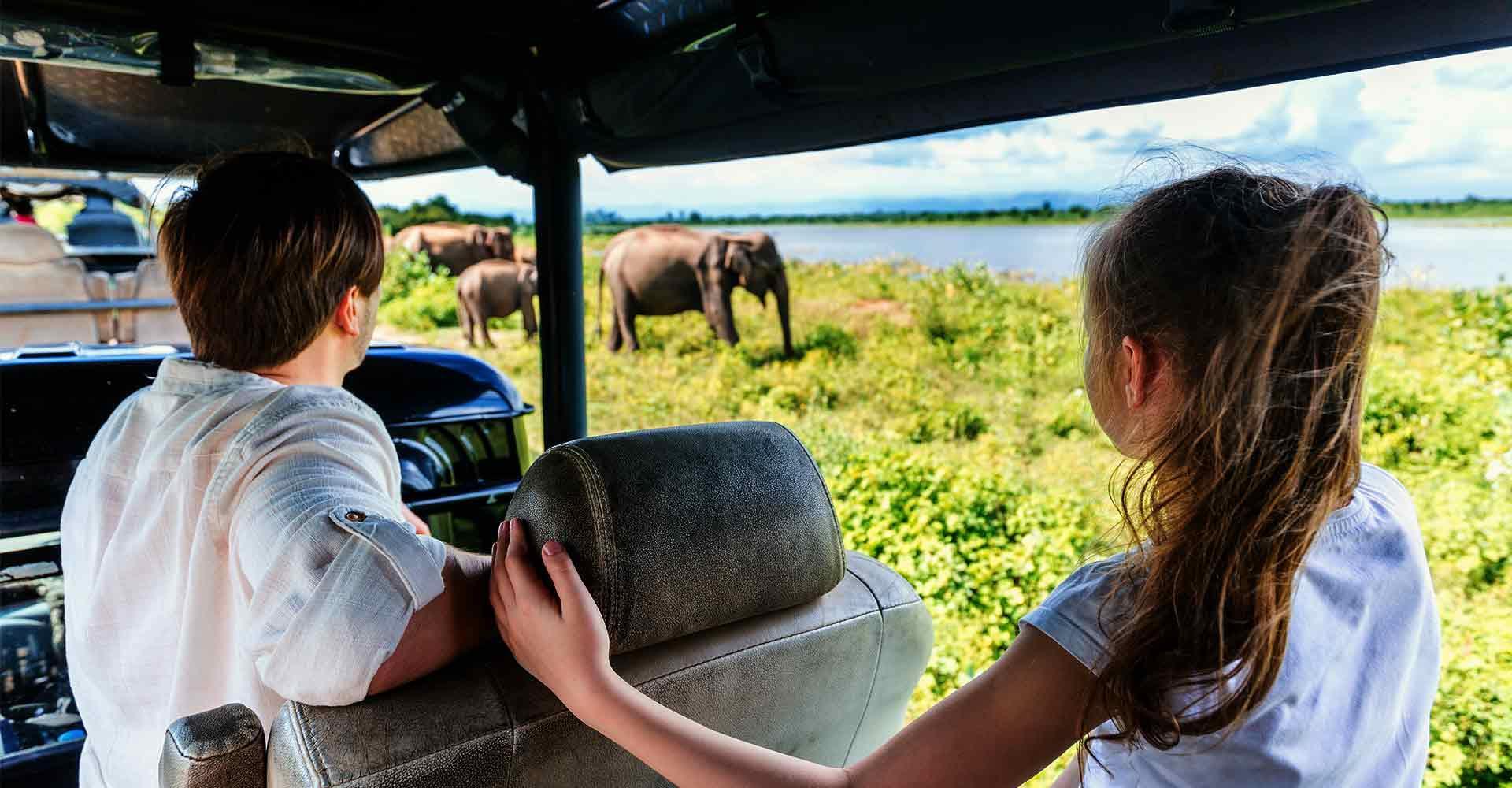
You arrive at the main gate as the sky shifts from charcoal to pale gold, the air still cool enough to justify a light layer. Your jeep enters through the checkpoint at 6:30 a.m., tires crunching on laterite track as the landscape opens into a sea of tawny grass dotted with termite mounds. Within ten minutes, your guide slows near a stand of kumbuk trees — a herd of nine elephants, led by a matriarch with a notched ear, strips bark methodically. You watch in silence as a calf nurses, trunk coiled tight. The jeep continues along the reservoir's perimeter. A crocodile slides from the bank, leaving a wake of disturbed silt. You pass a trio of sambar deer grazing in the shade, their coats rust-red against the scrub. At the northern loop, the guide cuts the engine. Seventy meters ahead, a lone tusker crosses the track, pausing mid-stride to test the wind. The moment stretches, then breaks — he ambles into the thicket, and the jeep moves on. By 9:00 a.m., the sun climbs higher, heat beginning to press. You circle back through the western sector, pausing at the Elephant Transit Home for a brief observation of the morning feeding. The young calves jostle at the milk stations, handlers moving quietly between them. The tour closes at the exit gate by 10:30 a.m., the grassland behind you already shimmering in the midday glare.
The park is open daily from 06:00 to 18:00 for your udawalawe safari tour.
Tickets are purchased at the gate, and there is generally enough capacity for all visitors on an udawalawe safari tour.
The conservation fee is 25 USD per person for foreign adult visitors.
Personal vehicles are not allowed; you must hire a licensed jeep for your udawalawe safari tour.
Early morning (06:00–08:00) is highly recommended for the best light and activity during any udawalawe safari tour.
Yes, children are welcome on any udawalawe safari tour with adult supervision.
Currently, you should coordinate with your guide, as official online services for individual udawalawe safari tour tickets are under development.
Contact your tour operator immediately to reschedule your udawalawe safari tour pickup time.
We recommend a 3–4 hour safari to ensure a comprehensive experience on your udawalawe safari tour.
The Elephant Transit Home is an ideal nearby landmark to combine with your visit.