
English| EUR
Suggested for you
More currencies
Choose a language
Udawalawe National Park operates on a fixed daily schedule designed around wildlife activity patterns in Sri Lanka's dry zone. Understanding when the gates open, when animals gather at waterholes, and how light conditions shift throughout the day determines whether you return with a memory card full of elephant encounters or a handful of distant specks in harsh midday glare.
Quick answer
Udawalawe National Park is open from 06:00 to 18:00 every day of the week, with no seasonal variation or weekly closures. The park admits visitors continuously throughout that window, but wildlife viewing success drops sharply after 10:00 when temperatures rise and larger mammals retreat to shade. Most experienced safari operators schedule departures to coincide with gate opening, maximizing the three-hour window when elephants, water buffalo, and deer congregate near the Walawe Reservoir and surrounding grasslands.
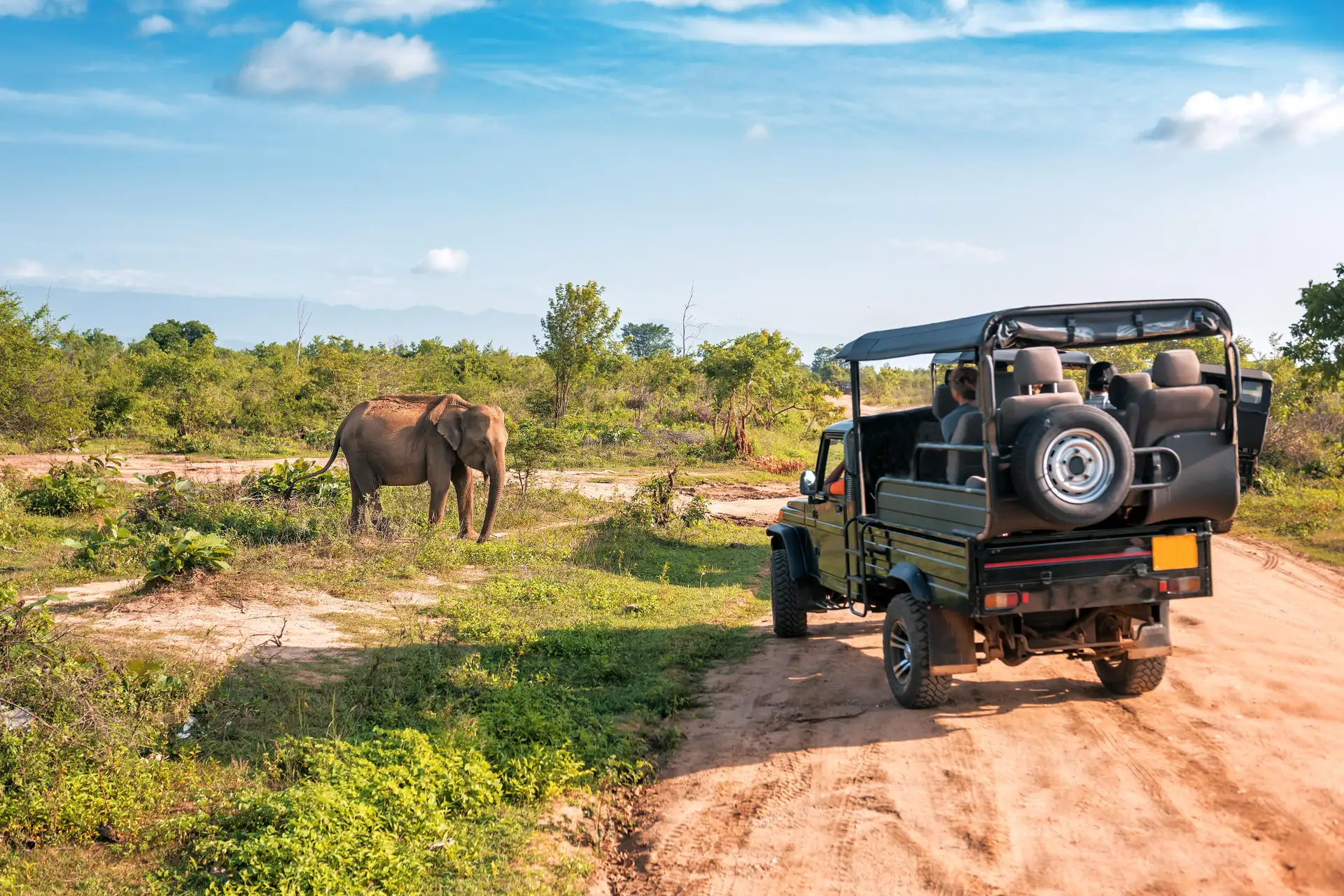
Udawalawe holds one of the highest elephant densities of any protected area in Asia, with herds visible year-round rather than migrating seasonally like populations in other Sri Lankan reserves. That consistency makes udawalawe safari timings less about catching a narrow migration window and more about working within the daily rhythm of a tropical dry-zone ecosystem. The park opens at dawn, and the first vehicles through the gate consistently log the highest sighting counts. Elephants drink and graze in open grassland during the coolest hours, often within 50 meters of the main loop roads. By mid-morning, as ground temperatures climb past 30°C, herds move into tree cover along seasonal watercourses, and the landscape empties. Afternoon drives between 15:00 and closing capture a second, shorter activity pulse, though dust and angled light reduce visibility compared to the crystal-clear conditions at sunrise. The 06:00–09:00 arrival window recommended by the Department of Wildlife Conservation reflects years of ranger observation data, not marketing preference. Udawalawe operates a one-way circuit system. Safari jeeps enter through the main gate near the park office, follow a designated loop past the reservoir, scattered waterholes, and dry scrubland zones, then exit without backtracking. The full circuit takes two to three hours at wildlife-watching pace, with drivers pausing wherever animals appear. Unlike northern parks where dense forest limits sightlines, Udawalawe's open terrain allows long-range scanning, so positioning and timing matter more than luck. A jeep arriving at 06:00 covers the reservoir overlook and prime grassland during peak activity; one arriving at 11:00 navigates the same route in heat-stilled silence. Scheduling around udawalawe safari timings also means accounting for the 30-minute drive from Udawalawe town to the park entrance. Most guesthouses arrange pre-dawn pickups to reach the gate by opening, a logistics detail that eliminates the risk of losing the first hour to transit. The park enforces its 18:00 closure strictly—vehicles still inside after that time face fines, and rangers patrol the exit road at dusk to ensure compliance.
“A jeep arriving at 06:00 covers the reservoir overlook and prime grassland during peak activity; one arriving at 11:00 navigates the same route in heat-stilled silence.”
Udawalawe National Park remains open to visitors every day of the week. The park operates on a consistent daily schedule to facilitate wildlife viewing opportunities.
The best arrival window is 06:00–09:00, as animals are most active during the cooler morning temperatures before the midday heat. Arriving early provides the highest probability of observing elephants and other wildlife in their natural environment.
—
Morning hours offer the best light for photography and lower vehicle density. Entering at 06:00 maximizes time before the sun intensifies.
Dry, 25°C to 30°C
This period aligns with the dry season, forcing animals to congregate around water sources. Visibility is generally high due to reduced vegetation.
Hot, 30°C to 35°C
While temperatures are elevated, wildlife remains active near the reservoir. Early morning sessions are essential to avoid the peak heat of the day.
Verdict: The optimal safari experience is achieved by arriving at the park gates at 06:00 during the drier months of January through March.
Udawalawe National Park is located in Udawalawe, Sri Lanka. Access to the park entrance is primarily managed via road transport from surrounding hubs.
A18 Highway to Udawalawe-Thanamalwila Road
Route 122 from Colombo to Udawalawe Junction
Direct transfer from Mattala Rajapaksa International Airport (HRI)
To align with your safari, arrange for private transport to reach the main entrance gate before the gates open at 06:00. Private vehicles remain the most reliable method to ensure punctuality for your scheduled session.
Arrive prepared to maximize your early-morning window when wildlife activity peaks.
Everything you need to know about udawalawe safari timings
The park is generally accessible from 06:00 to 18:00 daily. Planning your udawalawe safari timings within this range ensures you can maximize your time observing the local elephant herds and birdlife.
While the park remains open throughout the day, the best Udawalawe National Park tours happen early. Most visitors prefer starting at dawn when the temperatures are cooler and predators are active.
Yes, the gates are open every day of the week, from Monday through Sunday, between 06:00–18:00. These consistent udawalawe safari timings allow for flexible scheduling of your visit to the reservoir area.
The entrance fee is 30 USD per foreign adult, which includes VAT. Please note that this fee covers park admission and is independent of the private jeep hire costs for your udawalawe safari timings.
Children are welcome to join family tours of the sanctuary. It is advisable to schedule their experience during the cooler morning hours to ensure comfort while navigating the rugged grassland tracks.
The best arrival window is 06:00–09:00. Arriving early provides the highest probability of spotting elephants and other mammals before they seek shade from the midday sun.